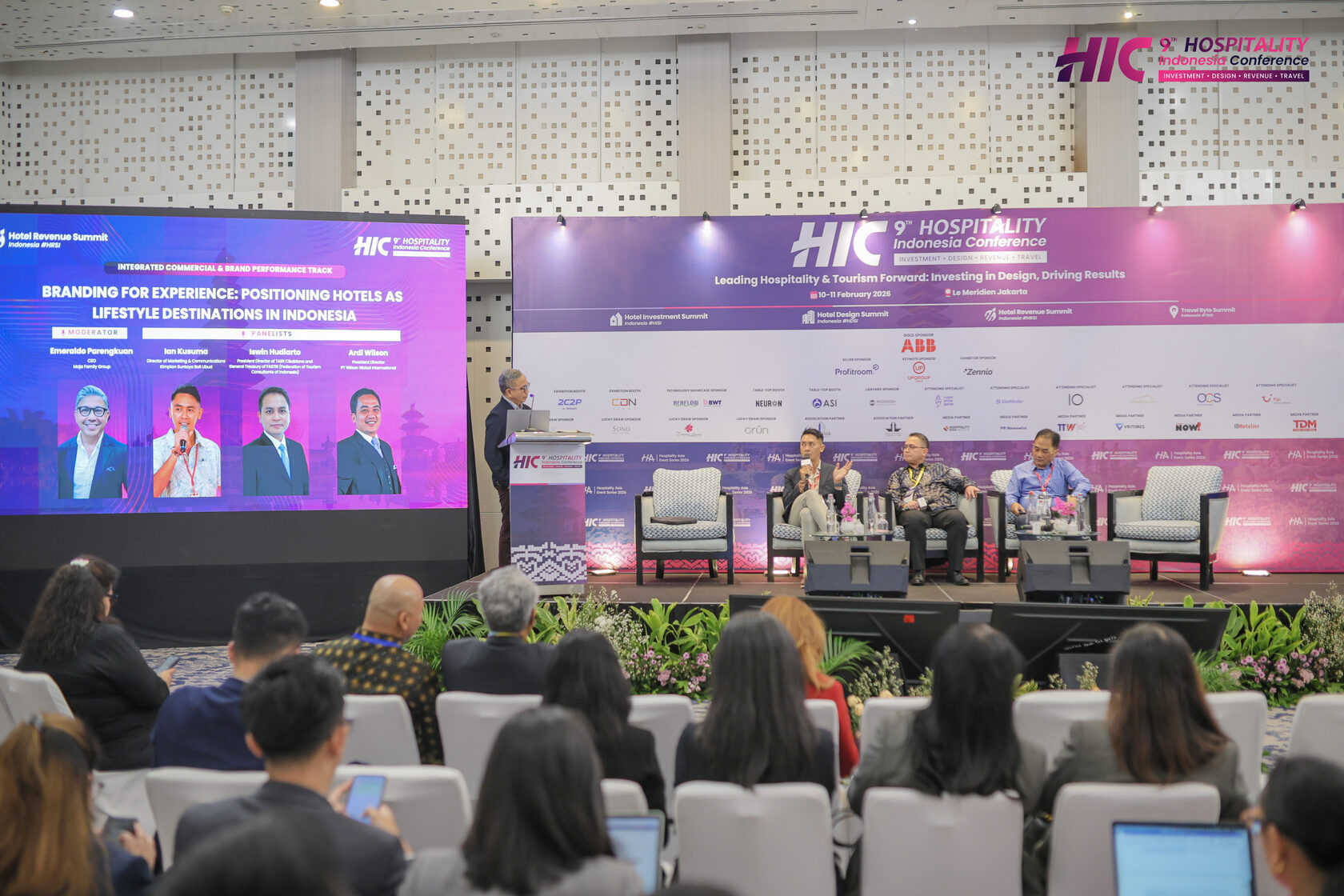
At the Hotel Revenue Summit Indonesia #HRSI, held under the 9th Hospitality Indonesia Conference #HIC2026, discussions reflected the growing complexity of Indonesia’s hospitality market. From predictive analytics and micro-market pricing to branding, distribution strategy, and operational design, the summit underscored how revenue today is shaped by both commercial precision and evolving guest expectations.
While panels explored how hotels can respond to shifting demand signals in real time, conversations also examined how Indonesia’s broader asset landscape is transforming.
Alternative Assets Gain Ground in Indonesia
A key theme that emerged was the rise of alternative hospitality assets and their growing role in the country’s development pipeline.
Kadek Suartana, Head of Hospitality Operations at PT Surya Semesta Internusa Tbk, noted that branded residences and serviced apartments are currently “gaining very good traction,” particularly in secondary and urban cities. In leisure destinations, he added, all-inclusive resorts are seeing strong momentum.
He emphasized that this growth does not signal the decline of traditional hotels. “It doesn’t mean the traditional hotels are being replaced,” Suartana said. Instead, expectations are expanding, with guests seeking integrated experiences such as wellness and spa offerings within the property itself. Sustainability and strong developer-operator partnerships, he added, are now essential to ensuring long-term asset performance. “It is not something that is nice to have, but it is a core element that we need to have for any business now.”
Lifestyle Hotels and the Shift Toward Personalization
Building on this diversification, speakers also highlighted how experience-led positioning is reshaping hotel concepts across Indonesia.
Guests today are driven less by amenities and more by connection—whether through distinctive culinary touches, wellness integration, or locally rooted storytelling. “It’s not about the amenities anymore,” the speaker said. “Rooms are not just a room but we want to create a story of how we can remember that place.”
This evolution is prompting a move away from rigid standardization toward more personalized service frameworks. Technology, in particular, is playing a central role. “The experience should start from the mobile phone before the guests come in,” the speaker added, underscoring how digital engagement now shapes perception well before arrival.
As reflected at #HRSI, Indonesia’s hospitality sector is entering a more nuanced phase—where revenue strategy is influenced not only by pricing models and demand forecasting, but also by asset diversification, personalized experiences, and sustainable development.
The conversations signaled an industry recalibrating for long-term resilience, competitive differentiation, and deeper guest connection across the archipelago’s diverse markets.
Stay tuned.
For more information, visit: www.hospitalityindonesiaconference.com/
For inquiries, please contact: delegate@hospitality-asia.com
While panels explored how hotels can respond to shifting demand signals in real time, conversations also examined how Indonesia’s broader asset landscape is transforming.
Alternative Assets Gain Ground in Indonesia
A key theme that emerged was the rise of alternative hospitality assets and their growing role in the country’s development pipeline.
Kadek Suartana, Head of Hospitality Operations at PT Surya Semesta Internusa Tbk, noted that branded residences and serviced apartments are currently “gaining very good traction,” particularly in secondary and urban cities. In leisure destinations, he added, all-inclusive resorts are seeing strong momentum.
He emphasized that this growth does not signal the decline of traditional hotels. “It doesn’t mean the traditional hotels are being replaced,” Suartana said. Instead, expectations are expanding, with guests seeking integrated experiences such as wellness and spa offerings within the property itself. Sustainability and strong developer-operator partnerships, he added, are now essential to ensuring long-term asset performance. “It is not something that is nice to have, but it is a core element that we need to have for any business now.”
Lifestyle Hotels and the Shift Toward Personalization
Building on this diversification, speakers also highlighted how experience-led positioning is reshaping hotel concepts across Indonesia.
Guests today are driven less by amenities and more by connection—whether through distinctive culinary touches, wellness integration, or locally rooted storytelling. “It’s not about the amenities anymore,” the speaker said. “Rooms are not just a room but we want to create a story of how we can remember that place.”
This evolution is prompting a move away from rigid standardization toward more personalized service frameworks. Technology, in particular, is playing a central role. “The experience should start from the mobile phone before the guests come in,” the speaker added, underscoring how digital engagement now shapes perception well before arrival.
As reflected at #HRSI, Indonesia’s hospitality sector is entering a more nuanced phase—where revenue strategy is influenced not only by pricing models and demand forecasting, but also by asset diversification, personalized experiences, and sustainable development.
The conversations signaled an industry recalibrating for long-term resilience, competitive differentiation, and deeper guest connection across the archipelago’s diverse markets.
Stay tuned.
For more information, visit: www.hospitalityindonesiaconference.com/
For inquiries, please contact: delegate@hospitality-asia.com