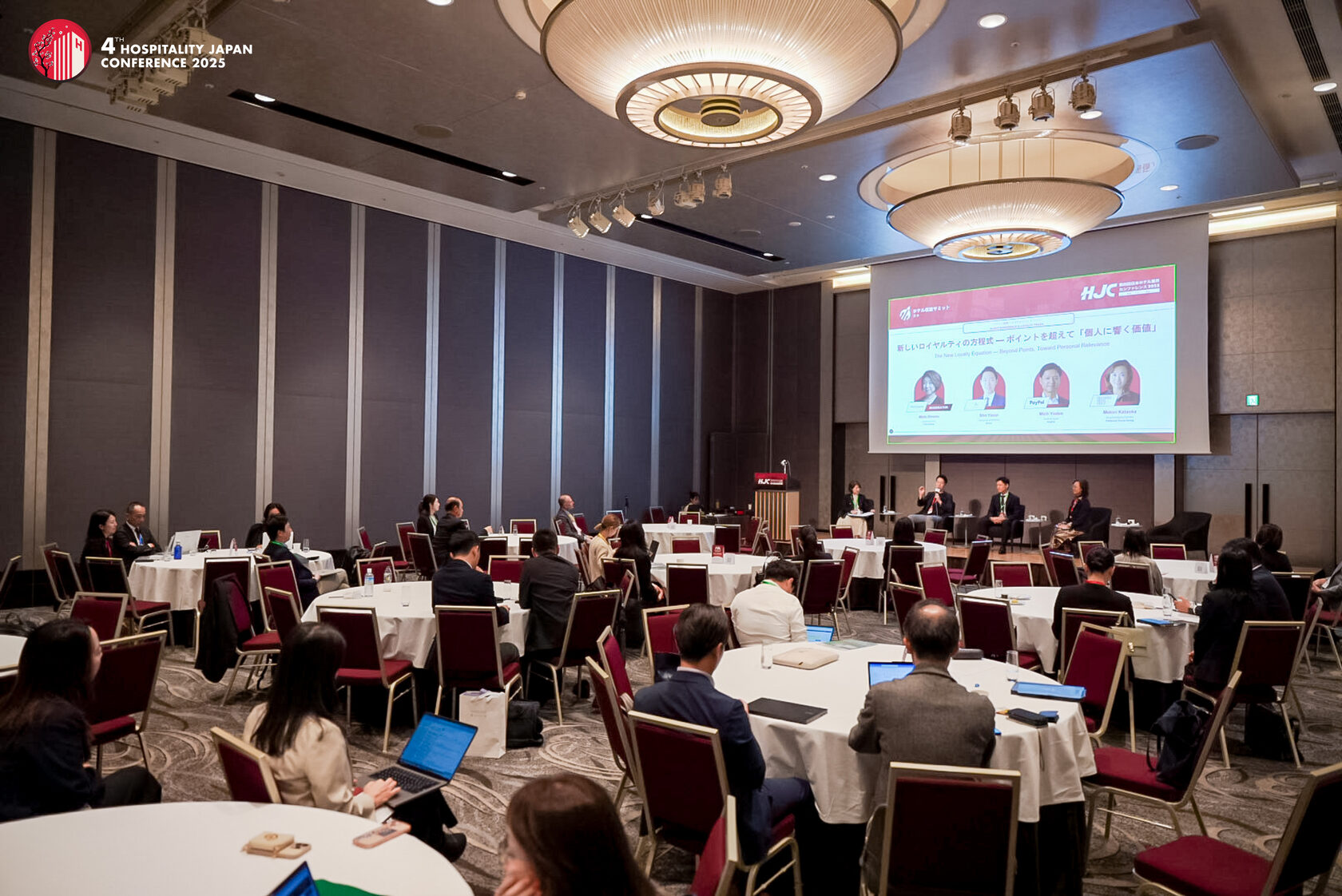
Tokyo, Japan — The Japanese hotel market is witnessing shifting tourism patterns influenced by seasonal holidays, natural disruptions, and evolving inbound travel behavior. With international arrivals rebounding and new destinations gaining popularity among foreign travelers, these trends are shaping how hoteliers approach Average Daily Rates (ADRs), pricing strategies, and market positioning across Japan’s key cities.
Tourism trends
At the Hotel Revenue Summit Japan #HRSJ, Shiori Sakurai, Business Development Manager at CoStar Group, shared that Japan’s hotel sector has entered a period of steady normalization — with performance now closely tied to the rhythm of domestic and international travel seasons. She observed that while inbound arrivals continue to boost occupancy, fluctuations around major holidays such as Chinese New Year and Easter have created noticeable shifts in booking patterns and rate adjustments throughout the year.
Sakurai noted that regional demand also reflects Japan’s weather volatility and travel seasonality, with typhoons and prolonged summers affecting accommodation trends in certain months. Still, destinations like Kyoto and Hokkaido continue to attract strong foreign interest, while Osaka’s market momentum has been further fueled by the Expo 2025 Osaka, Kansai, a world exposition expected to draw nearly 28 million visitors between April and October 2025 and significantly boost tourism across the Kansai region.
She added that many travelers are extending their stays, a sign of deeper engagement and slower travel patterns — particularly among inbound tourists. Meanwhile, domestic travel has softened, especially in major urban centers where foreign visitor volumes are highest. For hoteliers, this evolving balance between local and international demand underscores the importance of dynamic pricing and agile revenue strategies to sustain growth through 2026.
2026 Outlook
As Japan’s tourism recovery matures, hotel owners and operators are refocusing on sustainable rate performance and smarter revenue management. Panelists agreed that while ADRs have risen steadily since 2024, growth is expected to normalize in 2026.
Yoshihiko Hayafuji, head of Japan at AXA Real Estate Investment Managers, said demand in 2025 had grown about 8% to 10% year-over-year, but a slower pace is likely ahead. “For 2026, we expect growth to ease to around 4% to 6%,” he said. “Without continued ADR growth, meeting revenue targets will be difficult.”
The discussion also examined the impact of construction costs, new hotel supply and owner expectations. Rising development costs and resumed projects could slow rate expansion, while investors continue to push for higher returns. Katsuyuki Yoshida, executive officer at Solare Hotels and Resorts, said operators must strike a balance between ambition and realism. “Explosive ADR growth isn’t sustainable,” he said. “We’re focusing on a balanced approach — driving ADR without sacrificing occupancy.”
Technology adoption emerged as another key theme, with panelists highlighting Japan’s gradual shift toward AI-driven pricing systems. While automation enhances forecasting and data accuracy, human judgment remains essential for interpreting insights and shaping strategy. “AI assists, but it doesn’t replace human intuition,” Yoshida said, underscoring the importance of human oversight in pricing and product decisions.
From both operator and investor perspectives, the path forward lies in adaptability — leveraging data and technology while maintaining a deep understanding of market behavior. Sustainable growth, they agreed, depends not only on operational execution but also on how effectively owners and investors prepare assets for evolving guest expectations.
Looking ahead
As Japan’s hospitality landscape continues to evolve, the 5th Hospitality Japan Conference #HJC2026 will once again gather industry leaders, investors, and innovators in Tokyo on October 7–8, 2026. The conference will continue to serve as a platform for forward-looking dialogue on the country’s hotel, tourism, and development landscape.
The next edition will deepen conversations on investment resilience, adaptive design, and the next phase of Japan’s tourism recovery. With renewed focus on regional revitalization, talent sustainability, and cross-sector collaboration, #HJC2026 will explore how the industry can strengthen its competitiveness while preserving Japan’s distinct sense of place.
Through the Hotel Investment Summit Japan, Hotel Design Summit Japan, and Hotel Revenue Summit Japan, Hospitality Asia will continue to lead the conversation on shaping the future of Japan’s hospitality—where creativity, cultural authenticity, and commercial performance intersect.
Stay tuned for more details on #HJC2026.
Learn more at: https://hospitality-japan.com/ or https://www.hospitalityjapanconference.com/
For inquiries, please contact: delegate@hospitality-asia.com
Tourism trends
At the Hotel Revenue Summit Japan #HRSJ, Shiori Sakurai, Business Development Manager at CoStar Group, shared that Japan’s hotel sector has entered a period of steady normalization — with performance now closely tied to the rhythm of domestic and international travel seasons. She observed that while inbound arrivals continue to boost occupancy, fluctuations around major holidays such as Chinese New Year and Easter have created noticeable shifts in booking patterns and rate adjustments throughout the year.
Sakurai noted that regional demand also reflects Japan’s weather volatility and travel seasonality, with typhoons and prolonged summers affecting accommodation trends in certain months. Still, destinations like Kyoto and Hokkaido continue to attract strong foreign interest, while Osaka’s market momentum has been further fueled by the Expo 2025 Osaka, Kansai, a world exposition expected to draw nearly 28 million visitors between April and October 2025 and significantly boost tourism across the Kansai region.
She added that many travelers are extending their stays, a sign of deeper engagement and slower travel patterns — particularly among inbound tourists. Meanwhile, domestic travel has softened, especially in major urban centers where foreign visitor volumes are highest. For hoteliers, this evolving balance between local and international demand underscores the importance of dynamic pricing and agile revenue strategies to sustain growth through 2026.
2026 Outlook
As Japan’s tourism recovery matures, hotel owners and operators are refocusing on sustainable rate performance and smarter revenue management. Panelists agreed that while ADRs have risen steadily since 2024, growth is expected to normalize in 2026.
Yoshihiko Hayafuji, head of Japan at AXA Real Estate Investment Managers, said demand in 2025 had grown about 8% to 10% year-over-year, but a slower pace is likely ahead. “For 2026, we expect growth to ease to around 4% to 6%,” he said. “Without continued ADR growth, meeting revenue targets will be difficult.”
The discussion also examined the impact of construction costs, new hotel supply and owner expectations. Rising development costs and resumed projects could slow rate expansion, while investors continue to push for higher returns. Katsuyuki Yoshida, executive officer at Solare Hotels and Resorts, said operators must strike a balance between ambition and realism. “Explosive ADR growth isn’t sustainable,” he said. “We’re focusing on a balanced approach — driving ADR without sacrificing occupancy.”
Technology adoption emerged as another key theme, with panelists highlighting Japan’s gradual shift toward AI-driven pricing systems. While automation enhances forecasting and data accuracy, human judgment remains essential for interpreting insights and shaping strategy. “AI assists, but it doesn’t replace human intuition,” Yoshida said, underscoring the importance of human oversight in pricing and product decisions.
From both operator and investor perspectives, the path forward lies in adaptability — leveraging data and technology while maintaining a deep understanding of market behavior. Sustainable growth, they agreed, depends not only on operational execution but also on how effectively owners and investors prepare assets for evolving guest expectations.
Looking ahead
As Japan’s hospitality landscape continues to evolve, the 5th Hospitality Japan Conference #HJC2026 will once again gather industry leaders, investors, and innovators in Tokyo on October 7–8, 2026. The conference will continue to serve as a platform for forward-looking dialogue on the country’s hotel, tourism, and development landscape.
The next edition will deepen conversations on investment resilience, adaptive design, and the next phase of Japan’s tourism recovery. With renewed focus on regional revitalization, talent sustainability, and cross-sector collaboration, #HJC2026 will explore how the industry can strengthen its competitiveness while preserving Japan’s distinct sense of place.
Through the Hotel Investment Summit Japan, Hotel Design Summit Japan, and Hotel Revenue Summit Japan, Hospitality Asia will continue to lead the conversation on shaping the future of Japan’s hospitality—where creativity, cultural authenticity, and commercial performance intersect.
Stay tuned for more details on #HJC2026.
Learn more at: https://hospitality-japan.com/ or https://www.hospitalityjapanconference.com/
For inquiries, please contact: delegate@hospitality-asia.com