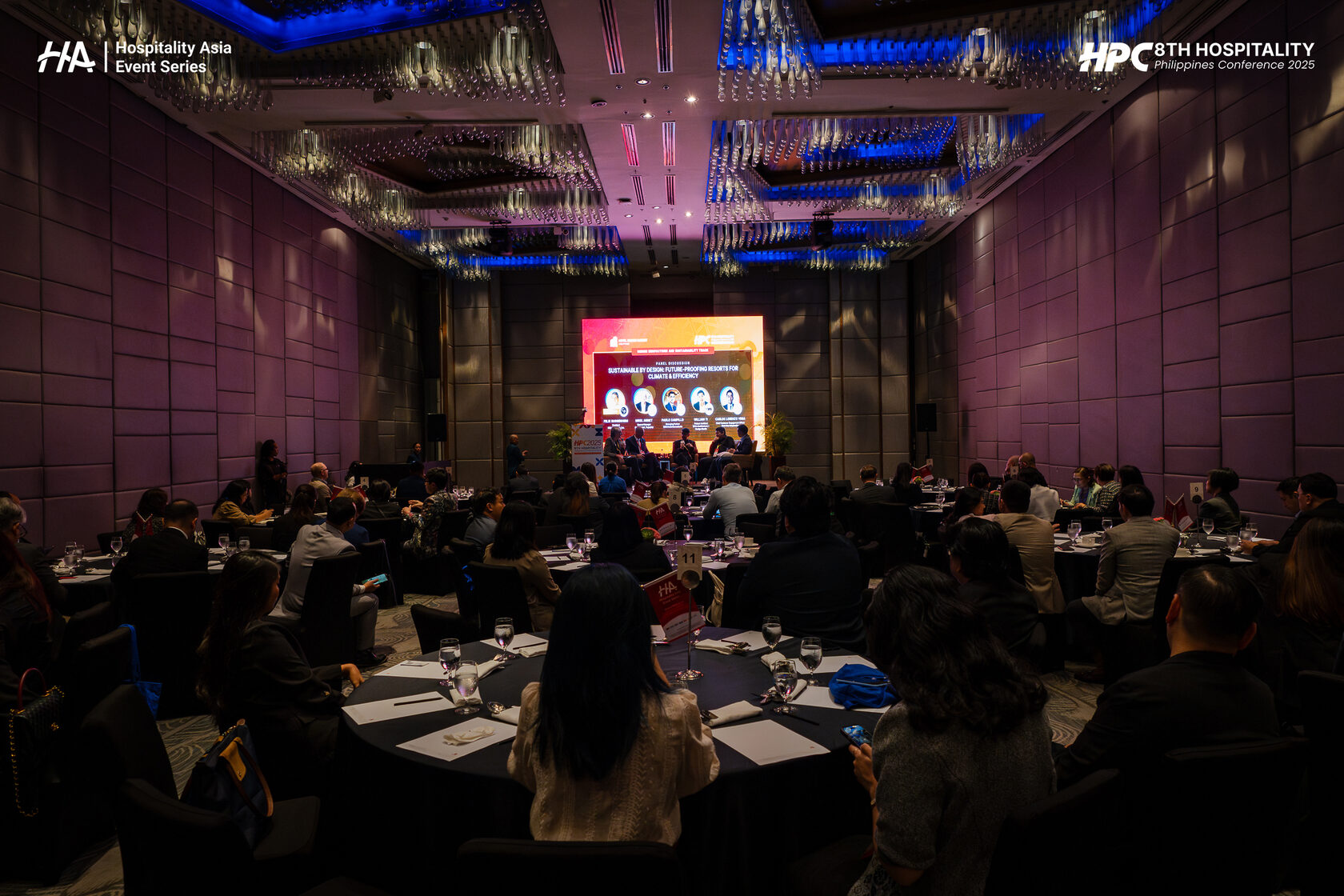
Manila, Philippines — Tourism took center stage at the Hotel Investment Summit Philippines #HISP, where industry leaders highlighted its power to unlock hotel growth and fuel broader economic gains. The central message: investments in tourism create ripple effects that extend across the hospitality sector and beyond.
Speakers underscored the crucial role of both government and the private sector in unlocking the full potential of tourism. The Philippines hit a record 8.26 million international visitors in 2019, with one in five coming from China, but numbers have not bounced back since.
The role of the government
Speakers pointed to government action as a make-or-break factor in this equation. Airports, for instance, were described as the “gateway” of international tourism—more than just transit points, they are the traveler’s first impression of the country. In markets like Singapore, airports are built to reflect national identity and business opportunities; the Philippines, they argued, should do no less.
Domestic demand was also in focus. While the MICE (Meetings, Incentives, Conferences, and Exhibitions) segment is booming, the Philippines still lacks large-scale venues that can support its growth. Without these, the country misses out on potential arrivals that could drive hotel occupancy and spur new investments.
Venessa Koo, Vice President for Business Development at The Ascott Limited, underscored the consequences of this gap. “Filipinos fly to Singapore to attend all the concerts. It’s not that you don’t have it here—it’s just that you don’t have a venue. And the venue is also so far away that getting there and getting back is difficult.”
Koo also pointed to overseas lessons, “Vietnam’s arrivals have improved by 21% this year. It is because they were able to offer a lot of super international-grade integrated resorts.”
Chris Cho, Vice President at Accor Singapore, Philippines, Japan, Korea, and Maldives, turned the spotlight to barriers in international travel, from visa challenges to political tensions, “There’s a bit of an issue between China and the Philippines, which has made the visa process very difficult for Chinese to come here. I think we would want to see the government make the visa process much easier for those in the key source markets.”
Beyond infrastructure, diversification emerged as another vital strategy for resilience. Joey Roi Bondoc, Head of Research at Colliers noted that spreading risk across different segments could help the industry weather crises such as global health scares or financial shocks.
“It is this diversification that would be crucial to shield your hotel business from any major global health scare or financial turmoil that might happen in the future.”
He further stressed the importance of adapting to evolving travel behavior, “I think it is very important to diversify. Previously, if you were focusing on business, perhaps now focus on ‘bleisure’—business and leisure—and then add the MICE segment.”
Meanwhile Cho also stressed the untapped potential of shopping tourism, urging policymakers to take cues from regional leaders:
“Shopping is actually quite a big part of the itinerary for leisure travelers. Like if you look at Bangkok and other markets, you see a lot of international travelers rushing to buy some items. Surprisingly, if you go to a luxury brand or boutique store in the Philippines, I think the cost of luxury goods is high, and there’s also a lack of ease or duty-free.”
The role of the private sector
Koo emphasized that closer collaboration with developers will not only boost domestic tourism but also balance competition within the local market.
“By having more selection, providing more competitive products, and developing with developers, it will also help attract more visitors into the country,” Koo said.
Chris Cho, Vice President at Accor Singapore, Philippines, Japan, Korea and Maldives added that developers should also capitalize on the growing demand for international hotel brands in the Philippines.
“There is a lack of international brands, and that also means a lack of accommodation choices within those brands.If you look at international players—whether it’s Hyatt, Hilton, or Marriott—they have a lot of amazing, interesting brands, including lifestyle, midscale, upscale, boutique, or collection brands. That’s what the market is lacking,” Cho said.
Private sector leaders also stressed the need for stronger engagement in shaping policy and driving change.
“If we want to see our numbers improve, we—the private sector—have to be more aggressive and play a bigger part in pushing the government to drive policy changes that benefit us. Because if you don’t play that part, nothing’s going to move,” said James Montenegro, Country Manager at Chroma Hospitality.
Looking Ahead
Building on the insights from this year’s discussions, the Hotel Investment Summit Philippines #HISP will return at the 9th Hospitality Philippines Conference #HPC2026, taking place on September 9–10, 2026, in Manila.
As a key pillar of the Hospitality Philippines Conference, the next edition of #HISP will continue to explore how tourism, infrastructure, and private sector collaboration can unlock new opportunities for hotel investment and long-term growth in the Philippines.
Breaking new ground, 2026 will also mark the launch of the Travel Byte Summit Philippines—a dedicated program spotlighting travel technology across land, air, and sea. This new addition reflects Hospitality Asia’s commitment to advancing innovation and accelerating digital transformation within the wider tourism and hospitality ecosystem.
Stay tuned.
Learn more at: www.hospitality-philippines.com
For inquiries, please contact: delegate@hospitality-asia.com
Speakers underscored the crucial role of both government and the private sector in unlocking the full potential of tourism. The Philippines hit a record 8.26 million international visitors in 2019, with one in five coming from China, but numbers have not bounced back since.
The role of the government
Speakers pointed to government action as a make-or-break factor in this equation. Airports, for instance, were described as the “gateway” of international tourism—more than just transit points, they are the traveler’s first impression of the country. In markets like Singapore, airports are built to reflect national identity and business opportunities; the Philippines, they argued, should do no less.
Domestic demand was also in focus. While the MICE (Meetings, Incentives, Conferences, and Exhibitions) segment is booming, the Philippines still lacks large-scale venues that can support its growth. Without these, the country misses out on potential arrivals that could drive hotel occupancy and spur new investments.
Venessa Koo, Vice President for Business Development at The Ascott Limited, underscored the consequences of this gap. “Filipinos fly to Singapore to attend all the concerts. It’s not that you don’t have it here—it’s just that you don’t have a venue. And the venue is also so far away that getting there and getting back is difficult.”
Koo also pointed to overseas lessons, “Vietnam’s arrivals have improved by 21% this year. It is because they were able to offer a lot of super international-grade integrated resorts.”
Chris Cho, Vice President at Accor Singapore, Philippines, Japan, Korea, and Maldives, turned the spotlight to barriers in international travel, from visa challenges to political tensions, “There’s a bit of an issue between China and the Philippines, which has made the visa process very difficult for Chinese to come here. I think we would want to see the government make the visa process much easier for those in the key source markets.”
Beyond infrastructure, diversification emerged as another vital strategy for resilience. Joey Roi Bondoc, Head of Research at Colliers noted that spreading risk across different segments could help the industry weather crises such as global health scares or financial shocks.
“It is this diversification that would be crucial to shield your hotel business from any major global health scare or financial turmoil that might happen in the future.”
He further stressed the importance of adapting to evolving travel behavior, “I think it is very important to diversify. Previously, if you were focusing on business, perhaps now focus on ‘bleisure’—business and leisure—and then add the MICE segment.”
Meanwhile Cho also stressed the untapped potential of shopping tourism, urging policymakers to take cues from regional leaders:
“Shopping is actually quite a big part of the itinerary for leisure travelers. Like if you look at Bangkok and other markets, you see a lot of international travelers rushing to buy some items. Surprisingly, if you go to a luxury brand or boutique store in the Philippines, I think the cost of luxury goods is high, and there’s also a lack of ease or duty-free.”
The role of the private sector
Koo emphasized that closer collaboration with developers will not only boost domestic tourism but also balance competition within the local market.
“By having more selection, providing more competitive products, and developing with developers, it will also help attract more visitors into the country,” Koo said.
Chris Cho, Vice President at Accor Singapore, Philippines, Japan, Korea and Maldives added that developers should also capitalize on the growing demand for international hotel brands in the Philippines.
“There is a lack of international brands, and that also means a lack of accommodation choices within those brands.If you look at international players—whether it’s Hyatt, Hilton, or Marriott—they have a lot of amazing, interesting brands, including lifestyle, midscale, upscale, boutique, or collection brands. That’s what the market is lacking,” Cho said.
Private sector leaders also stressed the need for stronger engagement in shaping policy and driving change.
“If we want to see our numbers improve, we—the private sector—have to be more aggressive and play a bigger part in pushing the government to drive policy changes that benefit us. Because if you don’t play that part, nothing’s going to move,” said James Montenegro, Country Manager at Chroma Hospitality.
Looking Ahead
Building on the insights from this year’s discussions, the Hotel Investment Summit Philippines #HISP will return at the 9th Hospitality Philippines Conference #HPC2026, taking place on September 9–10, 2026, in Manila.
As a key pillar of the Hospitality Philippines Conference, the next edition of #HISP will continue to explore how tourism, infrastructure, and private sector collaboration can unlock new opportunities for hotel investment and long-term growth in the Philippines.
Breaking new ground, 2026 will also mark the launch of the Travel Byte Summit Philippines—a dedicated program spotlighting travel technology across land, air, and sea. This new addition reflects Hospitality Asia’s commitment to advancing innovation and accelerating digital transformation within the wider tourism and hospitality ecosystem.
Stay tuned.
Learn more at: www.hospitality-philippines.com
For inquiries, please contact: delegate@hospitality-asia.com